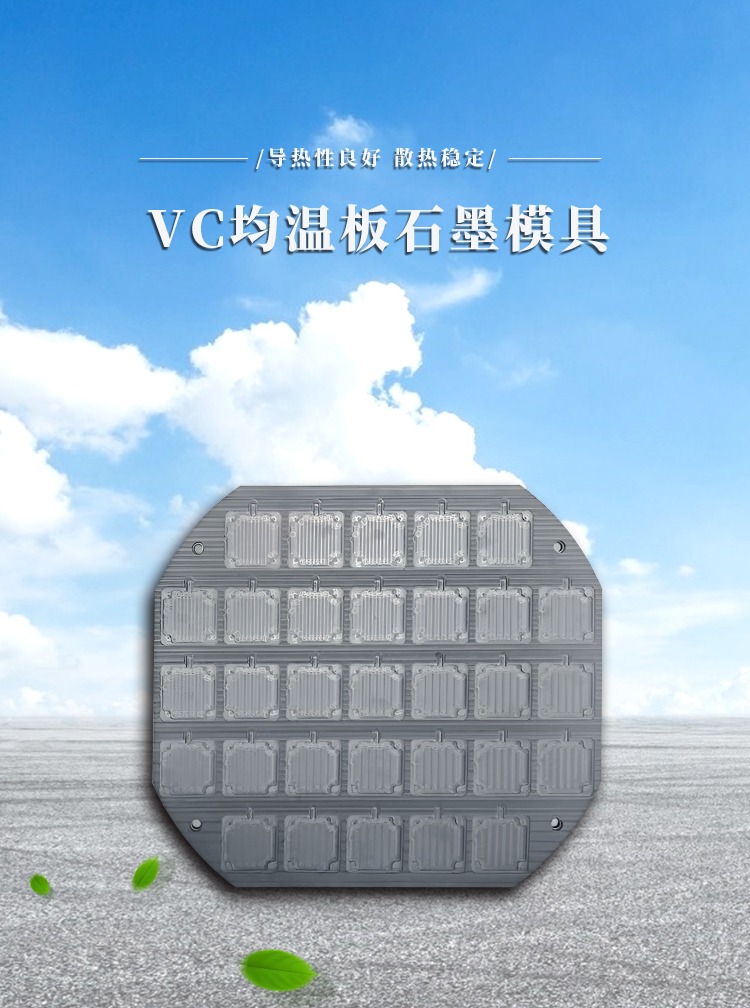
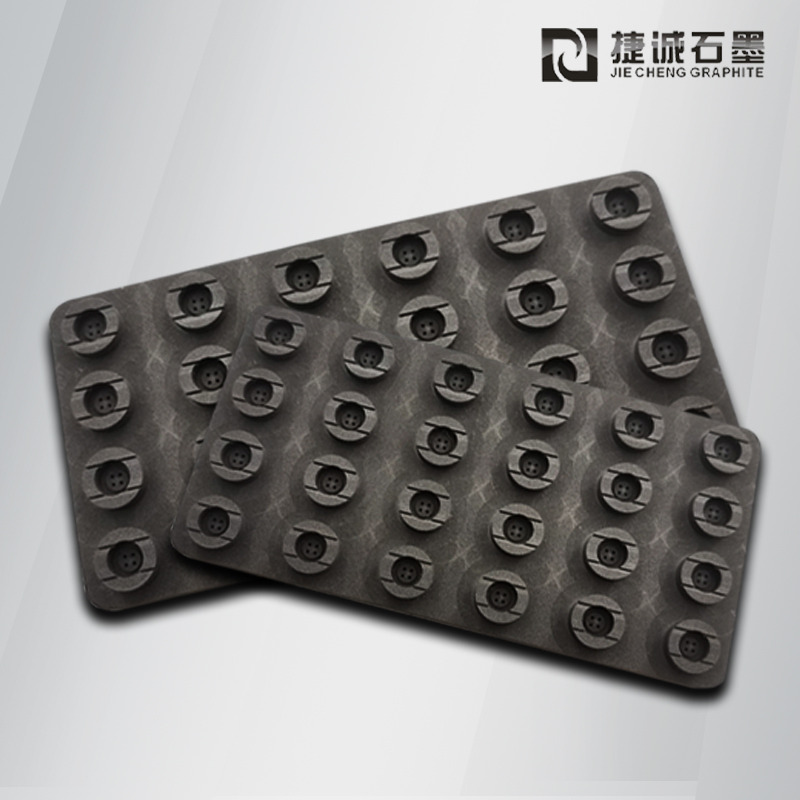
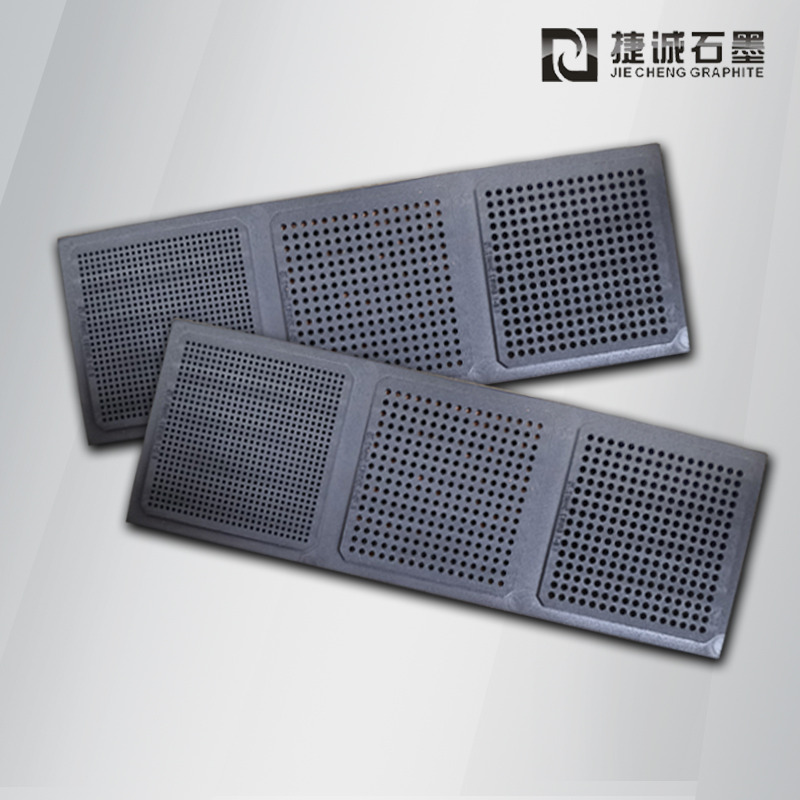
VC ultra-thin graphite molds are specially used for diffusion bonding and vacuum sintering shaping of ultra-thin vapor chambers with a thickness below 0.3 mm. Different from conventional VC graphite molds, they feature shallow cavities, thin-walled punches and strict tolerance fit, serving as core tooling for mass production lines of ultra-thin heat spreaders in consumer electronics and vehicle thermal management.
Many manufacturers directly adopt the material selection and operation specifications for ordinary VC graphite molds, ignoring the creep resistance and flatness retention capacity of thin-walled graphite. This leads to inconsistent thickness of vapor chambers after sintering, collapse of capillary structures, workpiece sticking, premature warpage and scrap of molds, resulting in severe yield fluctuation of ultra-thin products. Understanding the material selection, precision machining, structural design and on-site maintenance specifications of VC ultra-thin graphite molds is essential for stable mass production of ultra-thin vapor chambers.
Material selection of VC ultra-thin graphite molds and control of core indicators.
1. Ultra-fine grain high-purity isostatic graphite is the preferred substrate. It has fine grains, uniform microstructure and stable isotropy, with high flexural strength and low creep under continuous high-temperature compression, so warpage is less likely to occur after repeated heating and cooling. Ultra-thin VC sintering requires high cleanliness, so grades with deep purification above 2700℃ are preferred, with ash content controlled within 50 ppm to prevent high-temperature precipitation of metallic impurities from contaminating copper substrates and capillary cores of vapor chambers.
2. Density should not be too low. Graphite blanks with density higher than 1.8 g/cm³ are generally selected. The dense matrix has low porosity, so tin vapor and copper volatiles hardly penetrate into the material during sintering, reducing surface erosion and powder shedding. Low-density graphite comes with lower cost, but thin-walled parts are prone to indentation under pressure and rapid flatness failure, making it unsuitable for ultra-thin shaping applications.
3. Consistent thermal expansion coefficient is critical. The upper mold, lower mold and positioning backing plate in one set of fixture should be made from the same batch of blank as much as possible. The small difference in thermal expansion ensures uniform load distribution during heating and pressing and avoids local overload that crushes the capillary structure of VC.
4. Compression-molded graphite is not recommended for ultra-thin VC molds. It shows obvious anisotropy, and thermophysical properties vary in different directions. Thin-walled parts deform unilaterally under heat and pressure, and parallelism quickly goes out of tolerance. It is only suitable for thick vapor chambers and trial sintering with loose precision requirements.
5. Thermal shock resistance is a key evaluation indicator. Ultra-thin molds have thin wall thickness and low heat storage capacity. Large temperature difference stress concentrates during heating and cooling in the furnace. Graphite with poor thermal shock resistance tends to form invisible microcracks, which expand after multiple cycles and eventually cause edge chipping.
6. Imported high-purity graphite and domestic ultra-fine graphite can be selected according to actual needs. Imported fine-grained grades are preferred for high-cleanliness and long-cycle mass production lines. Domestic top-tier isostatic graphite can be adopted for processes with stable conditions after small-batch verification to balance delivery cycle and material cost.
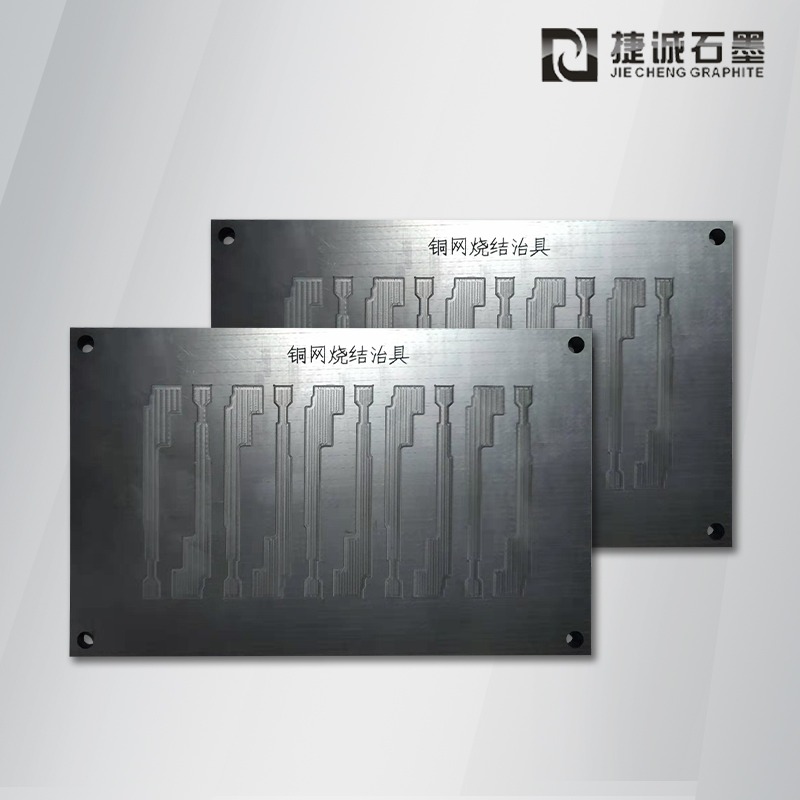
2. Cavity clearance shall be reserved in advance combined with the compression allowance of VC blank and thermal expansion coefficient of copper. Too small clearance will over-compress the VC during sintering and block the flow channel; excessive clearance fails to shape the workpiece and causes out-of-tolerance thickness. Ultra-thin products have far smaller tolerance margin than ordinary VC.
3. Structural design should avoid abrupt thickness changes. Gentle chamfers are added at transitions of punches and cavities to disperse stress concentration. Large-area ultra-thin molds can be equipped with auxiliary reinforcing ribs to improve rigidity and restrain sagging caused by high-temperature creep.
4. Mirror polishing is the mainstream surface treatment. The low roughness of the working surface reduces high-temperature affinity and sticking between copper foil and graphite, and the workpiece surface is not easily scratched during demolding. Polished raw graphite will not introduce foreign impurities from impregnation, which fits high-cleanliness vacuum sintering.
5. SiC anti-oxidation coating shall be used cautiously. The coating occupies dimensional tolerance, so extra machining allowance must be reserved. Mismatched thermal expansion between coating and graphite substrate tends to cause peeling in production lines with frequent furnace access and rapid cooling, and fallen particles will directly contaminate ultra-thin VC.
6. Anti-seepage impregnation is generally not applied to the working surface of ultra-thin VC cavities. Impregnated resin tends to foam on the cavity surface under high temperature and replicate defects on ultra-thin workpieces. Impregnation can only be used on non-working outer surfaces of molds to block metal vapor erosion of the substrate.
Root causes of common failure modes of VC ultra-thin graphite molds and on-site control solutions.
1. Overall warpage of molds is mostly caused by insufficient creep resistance of substrate, long-term load under high temperature, or thermal shock and eccentric load from fast heating and cooling. The improvement is to switch to high-density fine-grained graphite, optimize the sintering profile to slow down temperature change, and ensure parallel pressing and uniform load of the press head.
2. Copper sticking and material adhesion on the cavity surface mainly result from insufficient surface finish, poor vacuum in the furnace and accumulated copper vapor. Polish and clean the cavity regularly, control the oxygen partial pressure inside the furnace, and adjust the peak sintering temperature and holding time if necessary to reduce the interfacial reaction between copper and graphite.
3. Chipping and block falling of thin-walled punches are mainly induced by the brittleness of graphite, collision during assembly and transfer, unilateral force and thermal shock. Molds shall be stored separately with soft spacers on working surfaces, stacking shall be avoided during handling, and furnace opening frequency shall be reduced to mitigate temperature fluctuation.
4. Deteriorated thickness consistency of finished VC is caused by gradual drift of mold parallelism with batches. Establish a regular inspection log for molds, recheck flatness and parallelism after a fixed number of furnace runs, and regrind out-of-tolerance molds before mass defects occur.
5. Black spots and carbon powder contamination on workpieces come from loose powder shedding of the porous mold surface or precipitation of impregnation and coating substances at high temperature. Raw polished graphite is preferred for high-cleanliness production lines, and impregnation and coating treatments are minimized. Purge loose carbon powder on the cavity surface with dust-free nitrogen after each furnace run.
6. Short service life and fast consumption of molds are triggered by excessive oxygen content in the furnace and continuous oxidative weight loss of graphite. Conduct leak detection for the vacuum system, control oxygen level in the furnace, and shorten high-temperature exposure time by reducing furnace opening in intermittent production.
VC ultra-thin graphite molds are high-precision tooling for high-temperature processes, whose control logic differs greatly from conventional graphite molds. Material selection focuses on four indicators: high density, fine grain, low ash content and creep resistance. Machining strictly guarantees flatness, parallelism and cavity fit clearance. Operation prioritizes the temperature profile, furnace atmosphere and uniform stress. Standardize incoming inspection, periodic re-measurement and maintenance of molds to steadily maintain the thickness accuracy and complete capillary structure of ultra-thin VC and reduce scrap loss of ultra-thin heat dissipation components.