Graphite Parts Custom Machining: 6 Reasons OEMs Switch From Metal to Carbon Graphite
When a metal part keeps failing at high temperature, wearing out too fast, or contaminating the product, engineers often look at exotic alloys — and pay for them. What they miss is that a graphite part can do the same job cheaper, lighter and longer. From bearings that run dry at 400 °C to furnace parts that outlast steel by years, carbon graphite is the quiet upgrade. Here is what graphite parts are, where they win, and how to order custom-machined parts without guesswork.
When an OEM is weighing metal vs. graphite, Jiecheng Graphite (since 2003) provides grade data so the switch is an engineering decision, not a guess.
Six reasons OEMs switch to graphite parts
1. Heat resistance — keeps strength and shape far above the limit of most metals
2. Self-lubricating — bearings and seals run dry or with little lubrication
3. Lightweight — less inertia, easier handling, faster cycles
4. Chemical stability — resists many acids, salts and molten metals
5. Contamination-safe — does not weld or stick to glass, ceramics and crystals
6. Machinable — complex shapes cut precisely from rod, plate or block
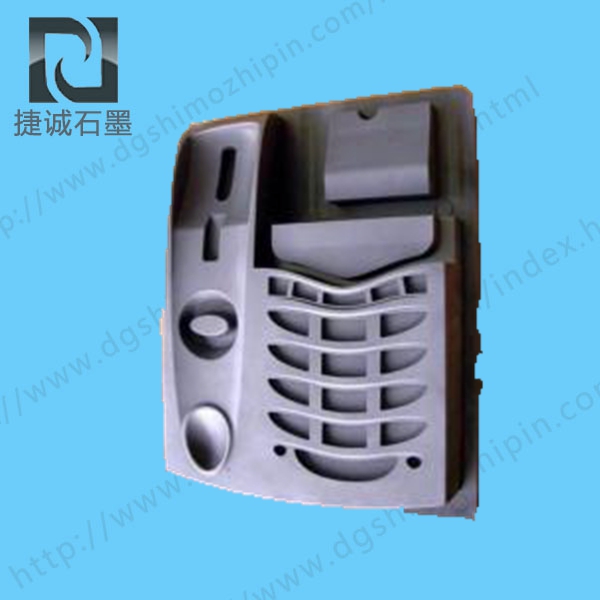
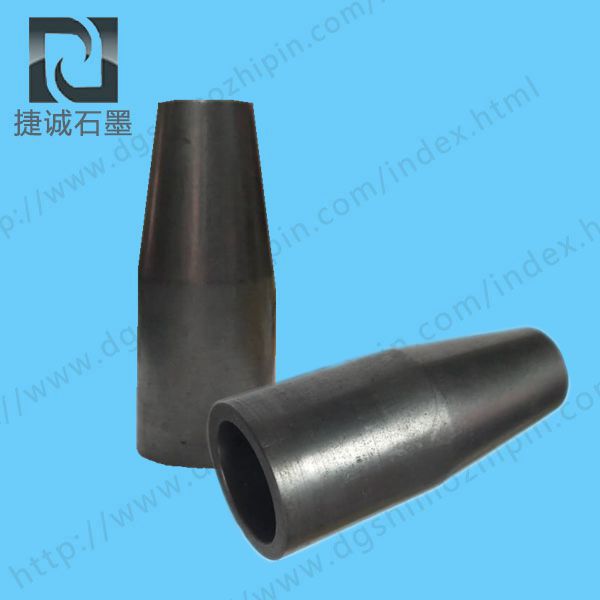
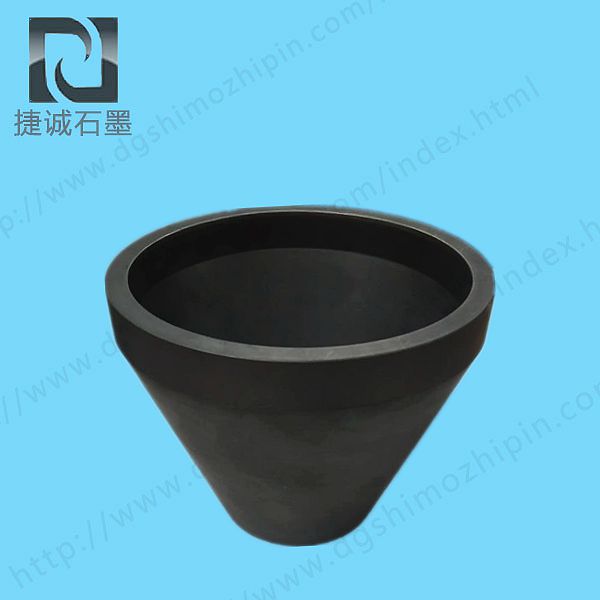
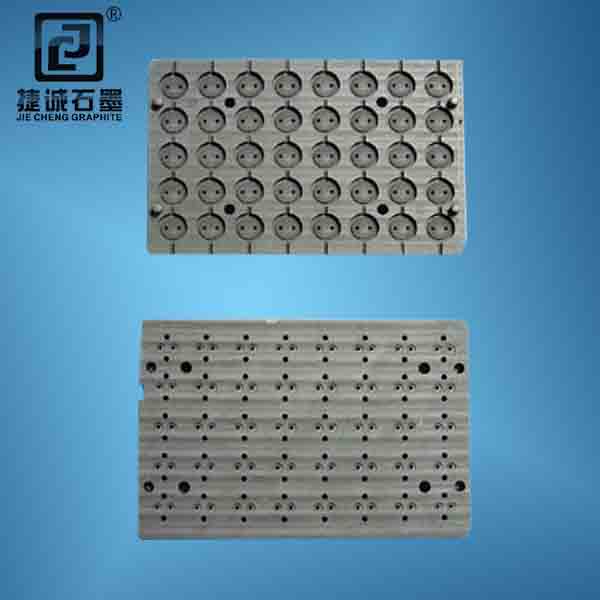
Typical graphite parts and their jobs
Part | Typical role | Why graphite |
Bearing / bushing | Dry-running rotating and sliding surfaces | Self-lubricating, high-temp |
Heater / electrode | Resistive heating and EDM current | Conductive, refractory |
Mold / die | Forming glass, ceramics, powder | Non-stick, dimensionally stable |
Crucible / saggar | Holding melt or parts at high temperature | Refractory, contamination-safe |
Seal / packing | Shaft seals in hot or corrosive service | Lubricious, chemically stable |
Support / fixture | Positioning parts in ovens and furnaces | Light, stable, non-reactive |
Custom parts in small or large batches are routine for Jiecheng Graphite’s 3,000 m² plant, from single prototypes to production runs.
How to order a custom graphite part
Give the supplier four things: a 2D or 3D drawing, the operating temperature and atmosphere, the load or fit requirement, and any purity or surface-finish limit. From those, the supplier selects a grade and confirms the achievable tolerance. A reliable shop quotes grade data — density, flexural strength, CTE, maximum temperature — rather than a vague “will do”.
Buying checklist
1. Drawing with critical dimensions and tolerances
2. Operating temperature and atmosphere (air / inert / vacuum)
3. Required strength, fit and surface finish
4. Purity requirement, if any
5. Material certificate + inspection report per order
FAQ
Can graphite replace a bronze or steel bushing?
In many high-temperature or dry-running applications yes, and with far longer life. Confirm load, speed and temperature with the supplier.
What is the minimum order for custom parts?
Minimums vary by shop. Many graphite specialists machine single prototypes as easily as batches, so ask.
How do you keep batch consistency?
Via a material certificate and lot traceability per order, so a re-order performs the same.
How to match a graphite grade to your part
Grade choice is the single biggest factor in whether a graphite part performs. Fine-grain isotropic grades give the smoothest finish, sharpest edges and tightest tolerances, making them the default for precision parts and high-purity processes. Coarser, higher-strength grades shrug off thermal shock and heavy loads, suiting large structural and furnace parts. Density and porosity decide strength and resistance to penetration; CTE decides how much a part grows with temperature. Give the supplier your operating temperature, atmosphere, load and fit, and they should return a grade with its key data — not a generic recommendation.
Tolerances, fits and finishes
Precision parts fail in two ways: dimensions drift across a batch, and fits that were right at room temperature bind or loosen when hot. Because graphite’s CTE is small but real, confirm running clearances and fits at operating temperature. Ask which tolerances the shop can hold per feature and how it verifies them — probe, CMM or gauge — and request the inspection report so a batch is never accepted on trust alone.
Common specification mistakes
· Forgetting the atmosphere — oxidation behaviour differs between air, inert and vacuum
· Quoting only one global tolerance instead of per-critical-feature bands
· Specifying purity without stating the process need, then overpaying
· Ignoring surface finish on faces that contact product
· No traceability, so a silent grade change ruins a re-order
Lifecycle cost: why the cheapest part is often the dearest
The price of a graphite part is a small part of its true cost. A part that fails mid-cycle stops the line, consumes the batch and forces an unscheduled rebuild — costs that dwarf the difference between two quotes. Compare parts on life, consistency and support: a grade matched to the process, a tolerance that fits, and a supplier that backs the part with data. Over the life of a furnace, the right part at a slightly higher price almost always costs less per good cycle than the cheapest quote.
This is why engineers increasingly buy graphite parts on total cost of ownership. They track life per part, compare grades and suppliers over multiple batches, and re-order the combination that delivers the best cost per cycle. A supplier who helps with that — by providing grade data, inspection reports and consistent re-orders — reduces more cost than the ticket price suggests.
For fit and purity requirements, Jiecheng Graphite confirms tolerance and finish per part and keeps batch traceability for re-orders.
Dongguan Jiecheng Graphite Products Co., Ltd. has custom-machined graphite parts since 2003 — over 22 years in the graphite industry. From its 3,000 m² plant in Dalang, Dongguan (Guangdong–Hong Kong–Macao Greater Bay Area), Jiecheng Graphite runs more than 100 five-axis CNC machining centers and precision grinders, machining bearings, heaters, molds, crucibles, seals and fixtures, and exporting parts worldwide with material certificates and inspection reports.