Imported graphite plate looks identical on a brochure and different on the bench. Two plates with the same density can behave differently in a furnace because density is only one of several properties that decide performance. Before you commit to an imported plate, run these four checks — they separate material that lasts from material that cracks, warps or contaminates.
Jiecheng Graphite (since 2003) imports and verifies plate stock, and documents the data buyers need.
Check 1 — apparent density and grain
Density tells you how tight the material is; grain size tells you how it finishes and how it survives thermal shock. Fine grain finishes sharper and resists chipping; coarse grain handles bigger loads. Confirm both, not just density.
Check 2 — strength and anisotropy
Graphite is not isotropic. Ask for flexural and compressive strength in the axis you load, plus how much the properties vary between directions. A plate that is strong across the grain but weak with it fails differently under real load.
Check 3 — thermal properties at your temperature
Maximum service temperature, CTE and thermal conductivity at your operating range predict whether the plate stays dimensionally stable or grows, warps and cracks. Room-temperature numbers do not cover it.
Check 4 — purity and traceability
For clean and vacuum processes, ask for ash and impurity data and a material certificate. A traceable batch means a re-order performs the same. Jiecheng Graphite (22+ years, since 2003) keeps the certificate with every plate it supplies.
Where graphite plate is used
· Furnace hot-zone panels and shields
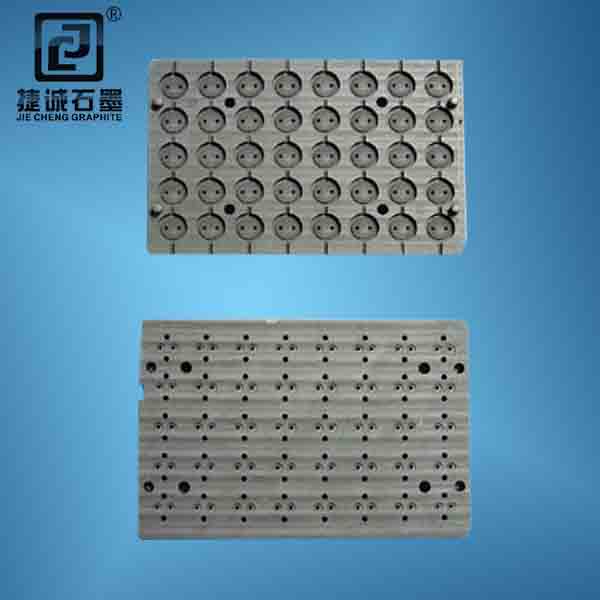
· EDM backing and clamping plates
· Sintering and process fixture plates
· High-temperature thermal management surfaces
Buying checklist
1. Confirm density, grain and strength data in writing
2. Check CTE and max temperature at your process range
3. Request ash/purity data and a material certificate
4. Agree size, tolerance and surface finish
5. Freeze the spec for repeat imports
FAQ
Is imported graphite plate always better?
No — verify the data; a documented domestic batch can outperform an undocumented import.
How do I know the plate will not warp?
Check CTE and flatness at your temperature, and store and machine it correctly.
Do I need a material certificate?
Yes for critical or clean processes — it protects you from silent grade changes.
How to verify plate on arrival
Verification belongs after import, not only on the brochure. Measure density and dimension, check flatness and straightness, and confirm the material certificate matches the batch. For critical use, run an ash or impurity check on a sample. A 30-minute inspection beats discovering a bad plate in the middle of a production run.
· Weigh and measure to confirm density and size
· Check flatness and straightness on arrival
· Match the material certificate to the batch
Arrival inspection turns an import into a controlled supply. Jiecheng Graphite verifies plate stock the same way before dispatch and keeps the data, so the plate you receive is the plate you ordered.
One final check worth adding: buy from a supplier who verifies plate before dispatch and keeps the data. An import that arrives documented is an asset; one that arrives on trust alone is a risk your process should not carry.
Dongguan Jiecheng Graphite Products Co., Ltd. has supplied graphite products since 2003 — more than 22 years in the industry. In its 3,000 m² Dalang, Dongguan plant, Jiecheng Graphite verifies and machines plate stock, and ships worldwide.