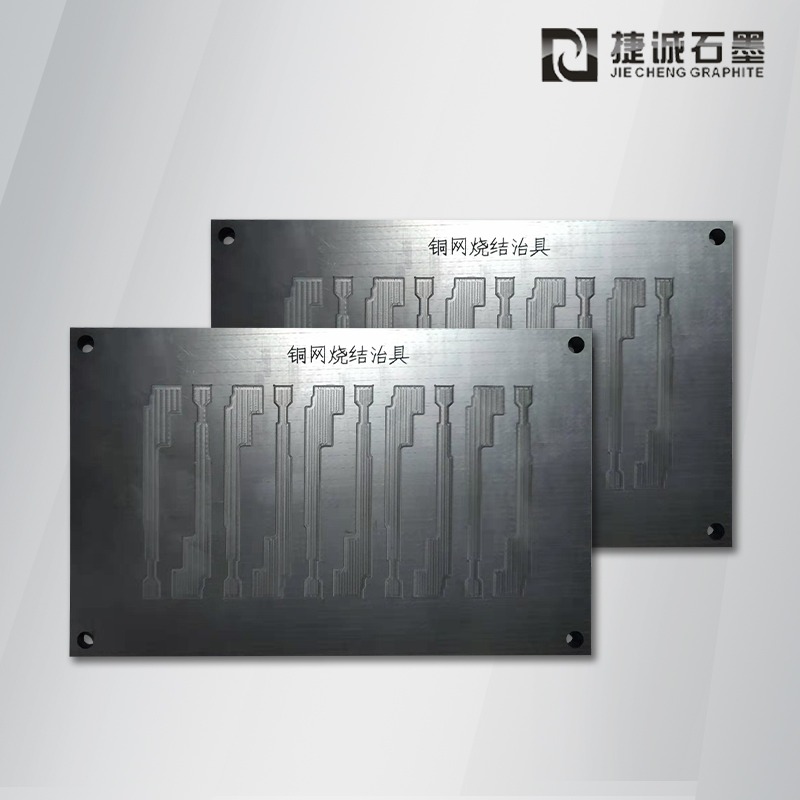
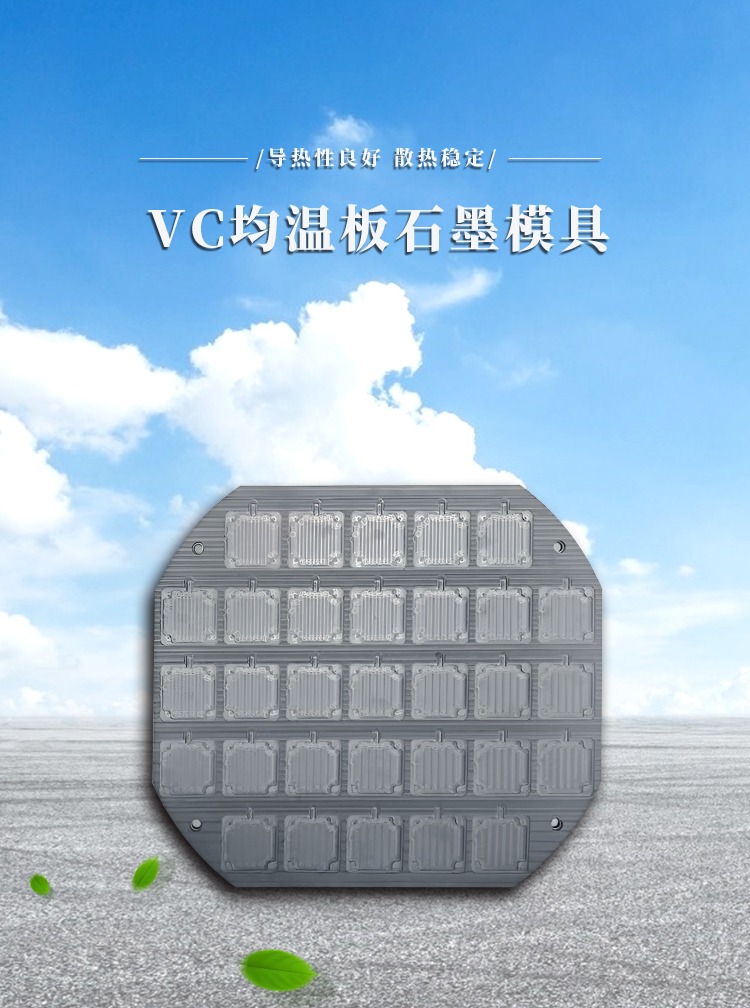
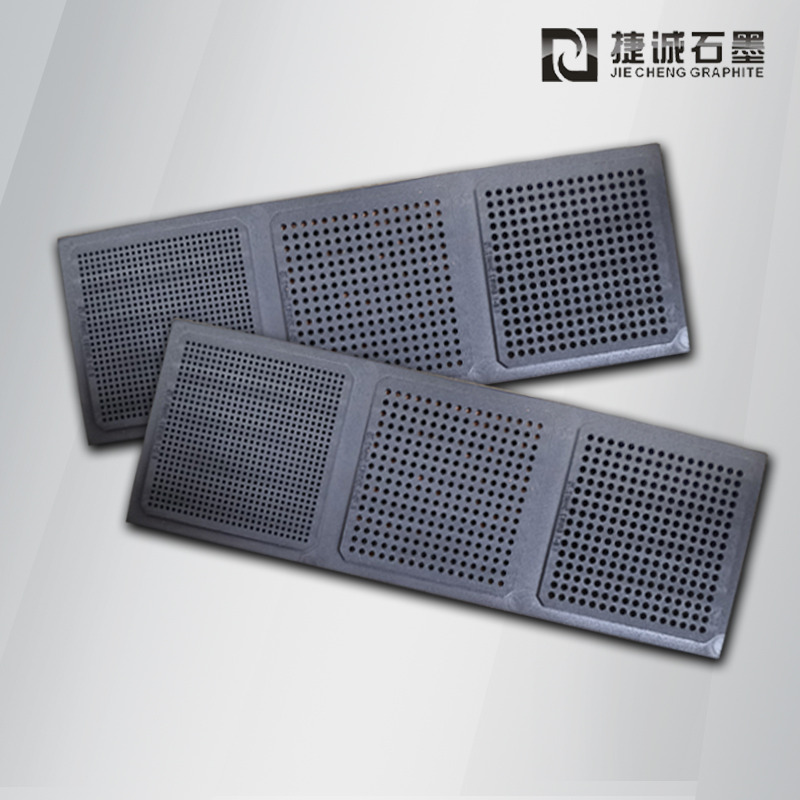
Graphite mold is the core tooling for high-temperature sintering, hot pressing and non-ferrous metal casting. Featuring high temperature resistance, uniform heat conduction, self-lubricating and easy demolding performance as well as low thermal expansion coefficient, it replaces metal molds and ceramic molds and is widely used in VC vapor chamber sintering, powder metallurgy, cemented carbide hot pressing, 3D glass hot bending, precious metal casting and other production lines. Many purchasers only place orders according to cavity dimensions, ignoring the grade of graphite blank, surface treatment method and cavity fit clearance. As a result, repeated mold cracking, workpiece sticking, impurity contamination and rapid dimensional drift occur, increasing spare part cost and product defect rate. Clarifying the material selection, surface process, working condition adaptation and failure improvement ideas of graphite molds is the key to stabilizing the high-temperature forming process.
Main blank types of graphite molds and key points for selection judgment.
1. Fine-grained isostatic graphite is the first choice for high-end sintering molds. The material is isotropic with uniform density and pore distribution and outstanding thermal shock resistance. After CNC precision machining, the cavity contour accuracy is high, and the surface after polishing is delicate, which is not prone to sticking. VC sintering fixtures, semiconductor packaging molds and cemented carbide hot pressing molds mostly adopt this substrate. High-purity versions are purified at a temperature above 2700℃ with extremely low ash content to prevent impurities from precipitating at high temperature and contaminating workpieces.
2. Compression-molded graphite molds have obvious cost advantages. The blank is unidirectionally pressed with anisotropy, generally uneven pore distribution and weak thermal shock resistance. It is suitable for simple structures, low-pressure and low-cleanliness powder metallurgy and ordinary MIM sintering flat molds. It is not suitable for complex cavities and working conditions with repeated drastic temperature rise and fall, and unilateral cracking is easy to occur.
3. Vibration-molded graphite blank sits between the above two types, with medium density and controllable cost. It is mostly used for large-size, gently stressed heat preservation supporting molds and simple casting ingot molds, and is rarely used in mass high-precision sintering production lines.
4. Key assessment indicators shall be matched with working conditions first. For high-pressure hot pressing working conditions, compressive strength is prioritized to prevent cavity collapse under pressure; for clean sintering, ash content is locked first; for working conditions with frequent cold and hot shocks, flexural strength and thermal shock stability are checked preferentially; for continuous casting molds, scouring resistance is also taken into account.
5. The structural design of the mold directly affects service life. Fillet transition is added at the corner of the cavity to disperse stress concentration; matched mold sleeves and punches reserve expansion clearance at high temperature. Too small clearance will lead to seizure at high temperature, while excessive clearance will cause eccentric stress and unilateral wear of the cavity.
6. Blank machining control is different from metal. Graphite is brittle. Feeding parameters shall be controlled during machining of thin-walled cavities and narrow grooves to avoid edge chipping and slag falling. Deburring is carried out after finishing. Tiny chipping on the cavity edge will transfer defects to the workpiece surface during sintering.
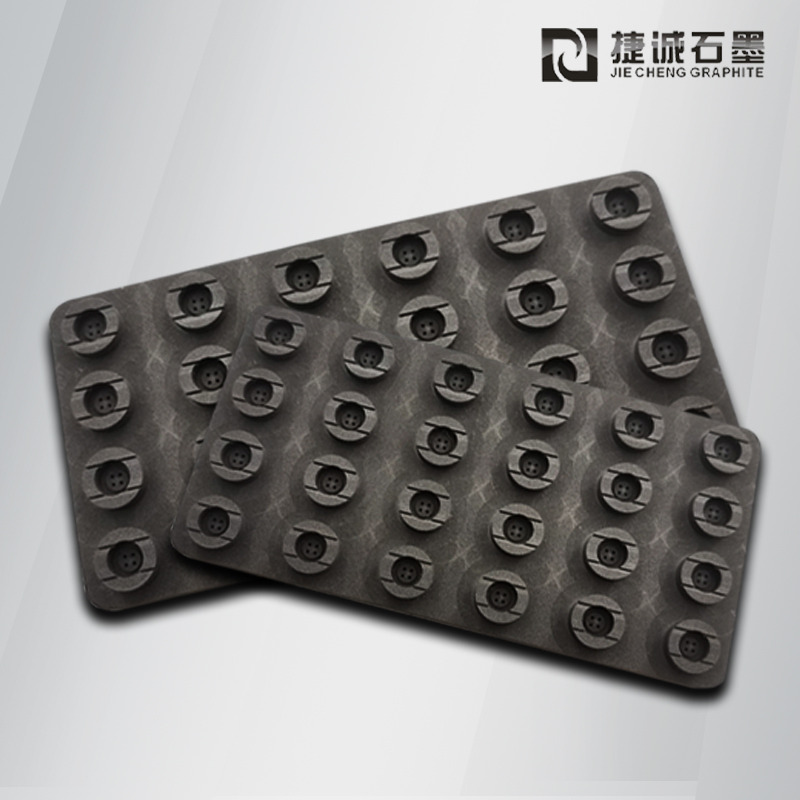
2. Anti-seepage impregnation uses resin or glass phase to fill the connected pores on the surface layer, blocking molten metal vapor and salt medium from penetrating into the substrate pores and slowing down internal erosion. It is suitable for non-ferrous metal casting and salt atmosphere sintering. Impregnation has an upper temperature limit; after exceeding the temperature, the impregnated phase decomposes and foams, and the cavity surface bulges and becomes scrapped.
3. SiC anti-oxidation coating forms a dense protective layer on the graphite surface to isolate oxygen and greatly raise the applicable temperature in aerobic environment. It is suitable for intermittent furnace entry and exit and working conditions with unstable atmosphere control. The shortcoming is inconsistent thermal expansion between the coating and graphite substrate. Frequent rapid cooling and heating easily cause cracking and peeling of the coating, and the position where the coating falls off will be rapidly oxidized and ablated.
4. Raw graphite mold without any surface treatment retains the original pores. It is mostly used in high-vacuum high-purity sintering to avoid impurity precipitation from impregnation and coating contaminating workpieces. However, medium vapor easily penetrates into the pores, and the interior will be gradually eroded after long-term use with relatively short service life.
5. Different surface processes cannot be replaced arbitrarily. Mirror-finished raw high-purity graphite is preferred for the cavity surface of VC clean sintering, and the supporting bottom plate can be equipped with SiC coating to extend service life. Anti-seepage impregnation is preferred for casting molds. The working surface shall be designed separately according to functions.
6. Post-treatment processes should be carried out after finishing. Coating and impregnation will bring dimensional changes, so corresponding compensation allowance shall be reserved during processing to avoid excessive dimensional deviation of the finished cavity.
Common failure modes of graphite molds, on-site causes and improvement schemes.
1. Cracking at cavity corners is mostly caused by no rounded corners at the turning position, large thermal shock from excessive heating and cooling rate, or eccentric force during pressing. Optimize the structure to add rounded corners, adjust the heating and cooling curve, calibrate the coaxiality of the press, and ensure uniform stress on the cavity.
2. Sticking and scratching of the cavity is mainly caused by insufficient surface finish of the cavity, inappropriate sintering atmosphere, and affinity reaction between workpiece raw materials and graphite. Polishing the cavity is prioritized, and a special release coating can be adopted if necessary. Meanwhile, the sintering curve is adjusted to reduce the interface reaction.
3. Oxidation weight loss and loose powder falling on the surface of the mold are caused by excessive oxygen content in the furnace. Without anti-oxidation protection, graphite will be gradually oxidized above 400℃. Strictly control the furnace atmosphere, adopt SiC coated molds for working conditions with fluctuating atmosphere, and reduce furnace opening frequency.
4. Dimensional drift of products in the same batch is attributed to high-temperature creep deformation of the mold, low blank density and long-term continuous pressure bearing. The cavity deforms after repeated thermal cycles. Upgrade to high-density isostatic graphite for high-pressure long-cycle working conditions, and carbon-carbon substrate can be used as the supporting frame for stressed structures.
5. Black spot impurity contamination on the workpiece is caused by excessive ash content of graphite blank, slag falling from the mold, or precipitation of impregnated and coated substances at high temperature. Replace high-purity graphite for clean working conditions, reduce impregnation post-treatment, and regularly blow and clean loose carbon powder on the mold surface.
6. The inner wall of the casting cavity is scoured into a bell mouth shape by continuous flowing molten metal. High-density wear-resistant graphite is selected, and the gate diversion structure is optimized to reduce the direct impact of molten metal on the cavity wall.
Graphite mold is not a general consumable. Its selection centers on temperature, pressure, atmosphere, cleanliness level and heating-cooling rhythm of the forming process. Blank grade, structural clearance and surface treatment need to be matched in design. High-purity fine-grained graphite with mirror polishing is preferred for vacuum clean sintering; SiC coating is preferred for intermittent air contact and unstable atmosphere; anti-seepage impregnation is preferred for non-ferrous metal casting. Standardize clamping, control heating rate and manage furnace oxygen content to reduce abnormal mold loss, stabilize product yield and cut the unit forming cost.